
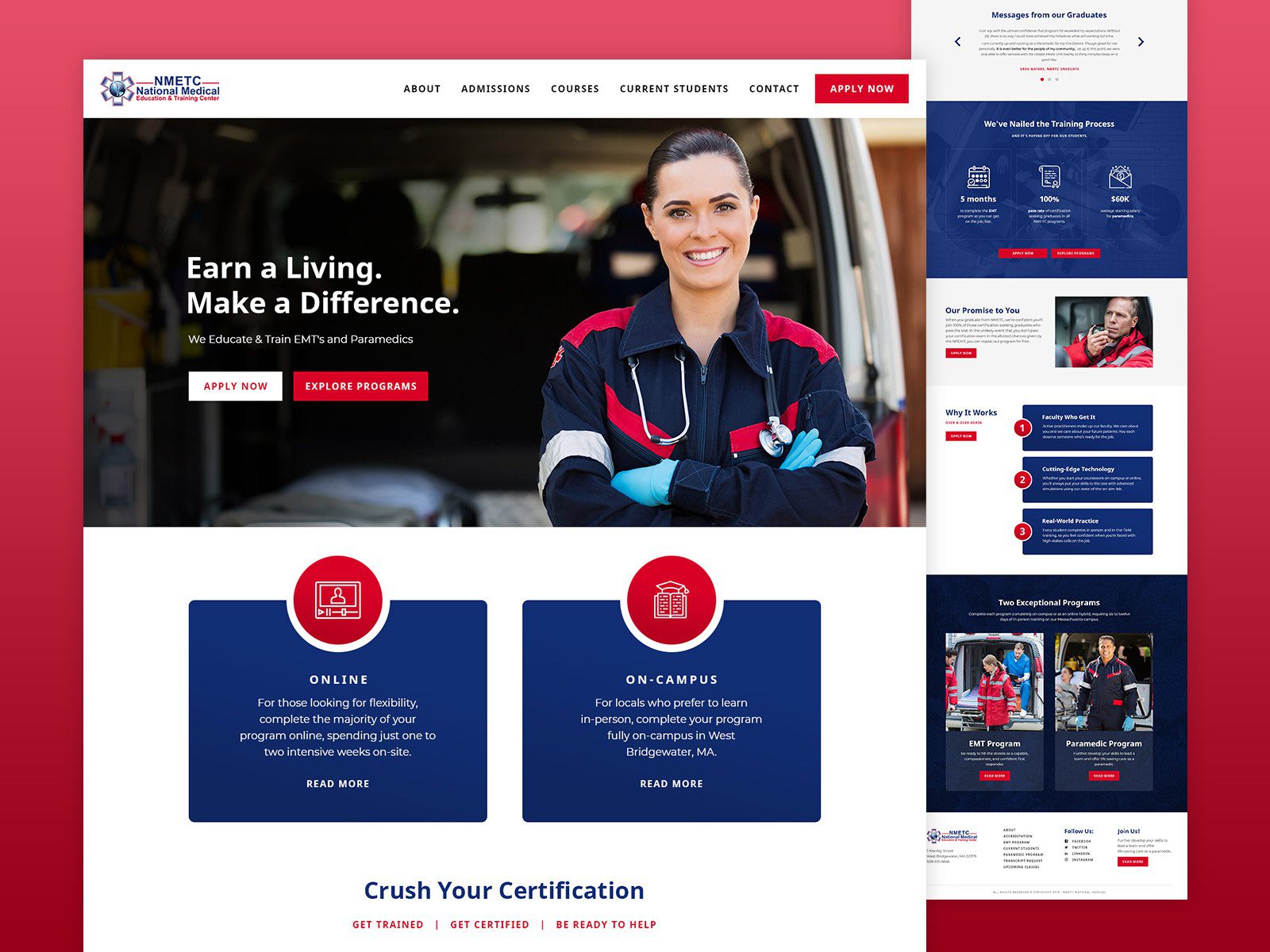
Website Design for a Training Center
28 June، 2021
مبادئ تحسين محركات البحث (SEO).. 40 مصطلحًا أساسيًا – ج 2
29 June، 2021
من المؤكد أنك تدرك أهمية Search Engine Optimization SEO is today for improving your website’s ranking in search results
on Google. You may want to increase your site’s visibility in search engines, but find it difficult to explain what you need
in technical terms to the people who manage it.
That’s why learning the basic terminology in the field of Search Engine Optimization (SEOis essential if you
own a website or work in marketing, but keep in mind that knowing technical terms alone is never enough
to achieve satisfactory results.
You also need to take practical steps to make your website a successful marketing tool by improving the return on
investment in content in particular.
Of course, this guide to technical SEO terminology will help you expand your knowledge. It can help you
I was a website owner or digital marketer looking to connect with developers and understand how to improve websites.
40 SEO Terms
.
1- 301 Redirect
This method redirects visitors from one web page to another when you change a page’s URL.
Use a 301 redirect to point the old URL to the new one.
This confirms the new URL and allows search engines to update their indexes. The term “redirect”
301 (301 Redirect) refers to a permanent move—that is, moving a website URL to another URL.
.
2- Alt text/ Tag or attribute
These two terms relate to HTML. Alt text refers to adding a description to images on your website.
Search engines read the Alt text—the text that describes an image—but they don’t read the image itself, unlike
people. So it’s recommended that you add this text to images on your website whenever possible.
.
3- Anchor Text
Link text is the clickable text that takes you to a link, such as “Click here” or “Learn more.” Link
الرابط Anchor text هو ببساطة النص الذي يوضع عليه الرابط التشعبي Hyperlink، ويكون في معظم
websites, it appears in dark blue and is underlined. It may appear in purple if you’ve visited the link before.
This is where anchor text helps search engines understand what the destination page is about, since it describes what
you’ll see if you click it.
.
4- Blog
It’s a part of your website where you should regularly publish content. This might include updates on your company’s achievements, as well as photos, videos, and notable events that are expected to attract
your audience’s attention.
انتباه الجمهور.
إذ إن كل منشور أو تدوينة على مدونتك هي صفحة جديدة يراها محرك البحث، وتشكل في الوقت نفسه
An opportunity to appear in online search results, and it’s important to keep your blog topics relevant to your industry.
.
5- Bookmark
A link to a website saved for later reference in a web browser or on a computer.
On the other hand, social bookmarking networks allow interested users to share the websites they
like with one another. So, if links to your site appear on social bookmarking sites, this
signals to search engine crawlers that people find your site’s content interesting.
.
6- Canonical URL
The best title under which a user can find information. This term refers to an element called
A canonical link element is an HTML element added to a website’s head section. It contains
the preferred or primary URL for a page.
Sometimes the same page content can be accessed through multiple URLs. Specifying
the canonical URL helps search engines identify the best URL for a piece of content, so it can be indexed
without indexing pages that contain the same content but have different URLs.
.
7- Conversion Form
A form that lets you collect information about your website visitors and helps turn them into customers.
Potential customers, as collecting contact information helps you follow up with and reach out to leads.
.
8- Cascading Style Sheets/ (CSS (Cascading Style Sheets
A styling language for web pages that focuses on the appearance and design of websites. It was specifically designed to separate formatting (colors,
fonts, buttons, etc.) from the content of a document written in a language such as HTML. This applies to colors,
fonts, images, and backgrounds used on pages. It is code that determines how different elements
on your website look, such as headings and links.
.
9- Directory
There are website directories, just as there are directories of people’s phone numbers. Submitting your website to
a directory gives you more than a backlink—it helps people find you.
أمّا أشهر أدلة الويب فهي: Yahoo! Directory و Dmoz
.
10- Domain
This is your website’s primary web address, which starts with www. It’s also a good idea to renew your domain registration for several years. Preferably,
search engines rank older websites higher because they show commitment.
.
11- الطية/ The fold
The term “fold” comes from the printing industry (the neatly folded edge of a sheet of paper). The fold is the visible edge
below the fold without scrolling, while the term “above the fold” refers to the visible area of the page
of a website that internet users can see without scrolling. If they scroll down, they will see the area known as
“below the fold.”
“The Fold” refers to the part of a web page users see as soon as they land on the site
without scrolling down.
It is a very important part of a website’s homepage, as it determines whether users will continue browsing the site or
Search engines give some priority to content above the fold, where new visitors will see it right away.
الجدد على الفور.
Having too many ads above the fold can also be considered a negative factor.
.
12- Headings
These are texts placed inside a heading tag on your website. They come in several sizes, such as
H1 and H2, which appear in a larger, bolder font than the rest of the text on the page.
.
13- HTML / HyperText Markup Language
HTML لغة ترميز النص الفائق ليس لغة برمجة؛ وإنما لغة ترميزيّة (markup language) تُستخدم لإخبار
the browser how to organize the web pages you visit. It is the part of your website’s code that search engines read,
Keep your HTML as clean as possible so search engines can read your site easily and frequently.
Put as much layout-related code as possible in CSS rather than HTML.
.
14- Inbound Link / Backlink
A link from one website to another. Having another website link to yours can improve your SEO,
especially if that website has a high page rank.
.
15- Internal Link
A link from one page to another on the same website, such as a link on your homepage that leads to your products page.
Internal links are a very important element of every website. They are used to connect pages that discuss
related topics.
.
16- Indexed Pages
These are pages from your website stored by search engines.
.
17- Javascript
A scripting language that allows website administrators to apply various effects or changes to a website’s content
their website as users browse it.
Search engines often struggle to read content rendered in JavaScript, but they’re getting better.
بمرور الوقت.
.
18- Keyword
A keyword is a word a user enters in the search box. Every web page should be optimized to attract visitors searching for
specific keywords.
Of course, rich content plays a major role in improving a page’s visibility in search results. You shouldn’t stuff a website with a keyword
and repeat it without purpose.
.
19- Link Building
An ongoing effort to get more inbound links/backlinks to your site and improve its search rankings
محركات البحث.
.
20. Long-Tail Keywords
An uncommon or rarely searched keyword, usually consisting of two or more words.
Small businesses should consider targeting long-tail keywords, as they are less competitive
and people who use them in searches are often more qualified.
For example, popular keywords such as “software” are highly competitive. It is very difficult to rank highly based
on them in search results.
.
SEO Fundamentals: 40 Essential Terms – Part 2







