

How to Successfully Market Your Products Using Wi-Fi
12 May, 2019
How to Let an Employee Go Professionally
12 May, 2019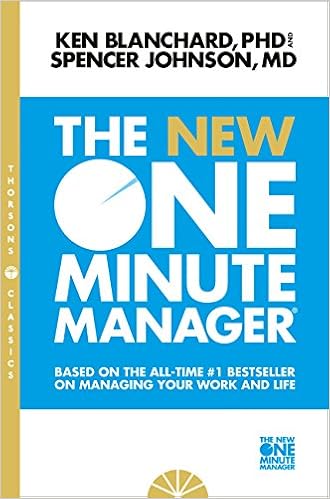
There are two types of managers in the world: the first cares about results and is described as autocratic, while the other cares about employees and is described as democratic. So which of them
According to this division, we have either profitable companies and losing employees, or winning employees and losing companies; that is the equation we find in any
An organization consisting of nothing more than half-managers who do not know their tasks or the limits of their responsibilities. It is not surprising that there are employees who have no goal other than working under
command A successful manager Indeed, he can grant them much of his expertise and knowledge.
From this perspective, it can be said: ”Successful managers manage themselves and manage those working with them for the benefit of the company; where employees benefit from the presence of
these managers.”.
>
Listening to subordinates
According to the book “The One Minute Manager” by its authors Kenneth Blanchard and Spencer Johnson, the first thing that distinguishes The Successful Manager“The One Minute Manager”
is his listening to his employees, knowing their perspectives and vision in developing work mechanisms, while holding a weekly meeting with them. One of these successful managers says that
he meets with his employees every Wednesday for two hours, listening to them as they explain and analyze what they accomplished during the past week, point out
the problems they faced, express what they wish to achieve, and then give their opinion on developing plans and strategies for the following week.”.
.
Establishing frameworks and policies
But what is the actual benefit of this listening?
In truth, the task of managers is to establish frameworks and policies, while employees handle implementation. Since these managers and planners have no knowledge of how to execute
the work on the ground, it was necessary to listen to their employees who discover opportunities themselves and face obstacles during implementation.
.
Employee trust
The equation we referred to above, represented by managers who care about results and others who care about employees, is only known by Successful managers Indeed; as they start
from the employee base to achieve the desired results. The key to this equation lies in a concise phrase: “Make your employees confident in themselves, satisfied with the work
they do, and then you will get the results you want, and perhaps more,” and always remember: ”Those who are confident achieve good results.”.
.
Quality, not quantity
The “One Minute Manager” focuses on quality not quantity, on quality not number, and on value. A service or product that does not include added value
Competitive Advantage will find no one to buy it, and we rarely find anyone in the job market competing by the number of things they offer; the idea is always in the quality.
A successful manager once advised, Entrepreneursaying: “Remember that quality is much more important than quantity in what is accomplished, and quality always comes before everything else.” However, this does not mean
that quantity is unimportant; ”efficiency” means both quantity and quality together, and ”if you are going to get a car on long-term installment, do not buy a short-term car.” Once
again, employees are considered the key to solving this puzzle. If you want to combine quantity and quality together, rely on competent employees, which takes us to the next point.
.
Good results in a short time
The “One Minute Manager” believes that 80% of results achieve 20% of important goals; therefore, he does not focus his eyes on results, but on the important goals that
push the organization forward. Therefore, he is the one who determines “one-minute tasks” for his subordinates, which are written tasks within about 150 words, kept by the employee
and the manager in a copy for each.
This method enables managers to achieve what they aspire to quickly, as it is not right to wait long until they achieve what they want.
.
“One Minute Praise”
One Minute Managers apply the principle: “Help your people reach their maximum potential, let them do something with literal perfection.” They strive to praise their employees
and watch them as they innovate; believing that praising employees, contemplating their moments of creativity, and drawing their attention to that is the optimal way to bring those
employees to their maximum potential.
It is notable here that the One Minute Manager deliberately observes his employees while they are doing things well and right, rather than when they are doing them wrong. That is, they do not lie in wait for
their mistakes, but want to praise them and draw their attention to the points of creativity in their work. This observation only takes place when taking on new tasks, starting a
new project, or if you are a new employee with this manager.
.
“One Minute Reprimand”
The One Minute Manager does not stop at praise alone; if he did that, he would miss the mark, but he sometimes uses blame as a means to correct his employees. When an employee makes a
mistake, he immediately finds the One Minute Manager right above him, or feels his hand patting his shoulder, specifying the mistake he fell into and leaving him the opportunity to feel the mistake
and his responsibility for it.
A skilled manager does not let things stop there, but reminds the mistaken employee of his appreciation for him, his effort, and what he contributes to the work, helping him overcome this mistake
and address the negatives resulting from it quickly. Then he forgets the mistake and does not return to reprimand his employee again; it leaves his memory forever.







