

What Causes Your Financial Plan to Fail?
15 April, 2018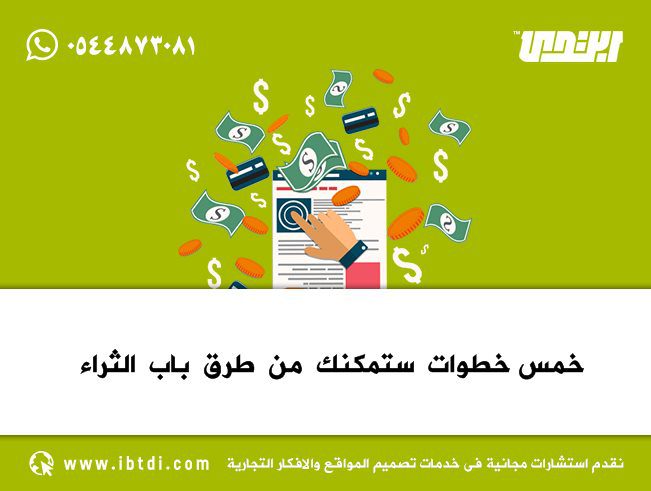
Five Steps to Set You on the Path to Wealth
15 April, 2018
Many people strive to improve their financial situation and secure a better standard of living for themselves and their families. But only a few move beyond the daily struggle
to earn money and build assets and income streams that bring in more than enough.
Because of limited financial awareness, many people make a series of mistakes that keep them stuck. In this context, self-made millionaire Steve
Siebold warns against clinging to outdated habits and conventional thinking about money, so you don’t undermine your chances of achieving your financial goals—and perhaps even becoming wealthy in
يوم من الأيام.
7 Financial Mistakes That Keep You Poor
While no one can predict your financial future, it’s worth watching out for these mistakes—they can keep you where you are, or make things worse:
.
1. You focus more on saving than on increasing your income
Saving is essential to building wealth, but you shouldn’t focus on it so much that you neglect increasing your income—the main goal for anyone seeking financial
freedom.
That doesn’t mean you should stop using practical saving strategies. But you should start thinking like the wealthy. As Mr. Siebold says, “Stop worrying
Stop worrying about your savings running out and start focusing on earning more money.”
Some experts say, “It’s not about how much money you make, but how much you save.” But that doesn’t mean you should neglect earning money. After all,
you have to earn money before you can save it. That’s why wealthy people often create multiple income streams and follow smart saving habits.
.
2. You haven’t started investing yet
Investing is the foundation of the financial freedom everyone dreams of. If you’re planning for financial success, start planning your investments now. The sooner you start
investing, the better.
On average, wealthy people invest 20% of their income each year. Their wealth isn’t measured by how much they earn each year, but by how much they’ve saved and invested over time.
The more their investments grow in value, the more they benefit.”
The first step is to build capital that can generate a reasonable income. The amount of capital you need to invest and the income you can expect from it depend on the field you
choose to invest in. Naturally, you’ll need some knowledge and experience to get started on the right footing.
.
3. You’re content to work for a fixed salary
Ordinary people choose to be paid based on their working hours—either a fixed salary or an hourly wage—while wealthy people choose to get paid
Based on the results, they are often self-employed.
Mr. Siebold says, “This doesn’t mean that many high earners don’t work by the hour, but the truth is that this is the slowest path to wealth
even though it’s the safest. Great people know that self-employment is the fastest path to wealth.”
Siebold adds that while smart people continue to build businesses and companies and accumulate wealth, “ordinary people seem content with a life of financial stagnation, remaining in a world of
jobs, at the mercy of a meager monthly paycheck and small annual raises.”
.
4. You buy things you can’t afford
If you choose to live beyond your means, you won’t become wealthy. Even if you start earning more or receive a significant raise, don’t immediately change
your lifestyle.
Self-made millionaire Grant Cardone says, “I didn’t buy a watch or a luxury car until my businesses and investments began generating several steady streams of income.”
In fact, even when I was a newly minted millionaire, I drove a Toyota Camry. Be known for your work ethic and principles, not for material things.
التي تشتريها”.
.
5. You rarely leave your comfort zone
If you want to build wealth, succeed, or excel in life, you need to get used to taking risks and living with uncertainty and discomfort. In fact,
Many wealthy people admit that they find comfort in taking risks.
Siebold says, “The middle class’s primary goal is to achieve physical, psychological, and emotional comfort. But elite thinkers learn early on that life
as a billionaire isn’t easy, and the need for comfort can be destructive. They then learn how to feel comfortable amid uncertainty and risk.”
.
6. Spend first and save what’s left
If you want to become wealthy, you have to pay yourself first—that is, save for the future.
Self-made millionaire David Bach says in his book *The Automatic Millionaire*, “What most people do when they earn some money is pay other people.”
“They pay the landlord, the credit card company, the phone company, the government, and others.”
Instead of spending your money and saving what’s left, you should save first. Set aside at least 10% of your total income and automate the process, as David
Bach says. That way, you’ll never see that money and will learn to live as if it didn’t exist in the first place.
.
7. You Believe Wealth Is Out of Reach
Siebold says, “The average person believes wealth is a privilege reserved for the lucky few. But the truth is that everyone today has
the opportunity to become wealthy if they’re willing to provide real value to others.”
Finally, self-made millionaire Steve Siebold emphasizes that, contrary to popular belief, the path to wealth is possible and accessible, and everyone has the same opportunity.
to become wealthy. He warns against seeking comfort from the outset. Most people’s primary goal is to be comfortable, but smart people learn early on that becoming wealthy
and achieving success in any form is not easy, and the need for comfort can be destructive.







