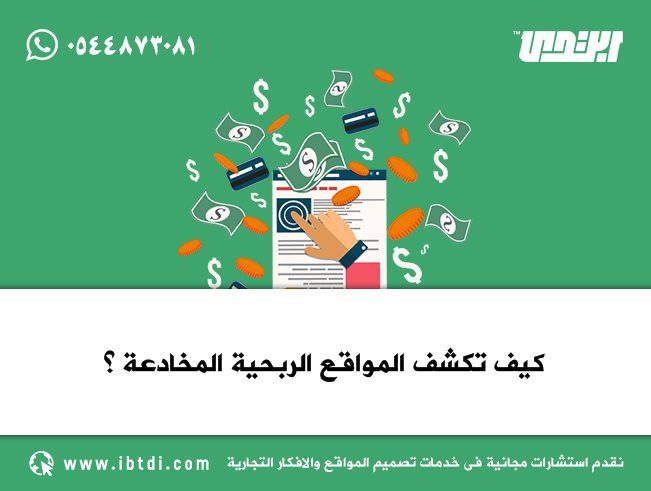
How to Spot Scam Profit-Making Websites
9 December، 2017
The Biggest Time-Wasters in Content Writing and How to Avoid Them
9 December، 2017
Developing a brand strategy consists of 10 steps
Consider your overall business strategy
A strong, well-differentiated brand makes it much easier to grow your company. But what kind of company do you want to build? Are you planning to grow on your own? Your
overall business strategy provides the context for your brand development strategy, so it’s the right place to start. If you’re clear about where you want to take
your company, your brand can help you get there.
.
Identify your target customers.
Who are your target customers? If you say “everyone,” you’ve made a very big mistake. Our research clearly shows that high-growth, high-profit companies
focus on clearly defined customers. The narrower your focus, the faster you grow. The more diverse your target audience, the greater your marketing efforts will need to be. If
How can you tell whether you’ve chosen the right target customer group? That’s where the next step comes in.
.
Research your target customer segment.
Companies that conduct systematic research on their target customer group grow faster and are more profitable. What’s more, those that conduct
research frequently (at least once a quarter) grow faster.
Research helps you understand your target customers’ perspectives and priorities, anticipate their needs, and craft your message in language that resonates with them. It also tells you
how they perceive your company’s strengths and current brand. As a result, it significantly reduces the marketing risks associated with developing
brand’s goals.
.
Develop your brand positioning.
You’re now ready to define your company’s brand position in the professional services market (also known as market positioning). How is your company different from
others, and why should prospective customers in your target audience choose to work with you?
A positioning statement is usually three to five sentences long and captures the essence of your brand positioning. It should be grounded in reality, and it should provide what
promise. It should also be a little ambitious, so you have something to strive for.
.
Develop your messaging strategy.
Your next step is to develop a messaging strategy that translates your brand positioning into messages for different target audiences. This typically includes
Your target audiences may include prospective customers, prospective employees, referral sources, other influencers, and potential partnership opportunities,
Although your core brand positioning should be the same for all audiences, each audience cares about different aspects of it. You will focus
Messages for each audience on the most relevant points. Each audience will also have specific concerns to address, and each will need different types
Evidence to support your messaging. Your messaging strategy should address all of these needs. This is an important step in making your brand relevant.
for the target audience.
.
Develop your name and brand logo.
For many companies, a name change isn’t necessary. But if a new company is burdened with a name that no longer fits its position, a name change may be in order. Even if
you don’t change your company name, a new logo and visual identity may make sense to better support your brand positioning.
Remember, your name and logo aren’t your brand. They’re ways to communicate or encode your brand. You have to live it to make it real.
And don’t make the mistake of showing the new logo internally to get consensus. Name And the logo and visual identity aren’t for you. They’re for your market, and should
to judge how connected they are, not how many partners are like them.
.
Develop your marketing content strategy.
We could have called this step “Developing Your Marketing Strategy.” But we didn’t. Instead, we call for a strategy تسويق المحتوى.
Why? Content marketing is particularly well suited to professional services firms in the internet age. It does everything traditional marketing does, but does
so more efficiently. Valuable educational content attracts, nurtures, and qualifies prospects.
Remember that your brand’s strength is driven by both reputation and visibility. Increasing visibility alone, without strengthening your reputation, rarely succeeds. That’s why
traditional “brand awareness” advertising or sponsorships often deliver disappointing results. Content marketing, on the other hand, increases both visibility and reputation.
At the same time, it’s also the best way to make your brand relevant to your target audience.
.
Develop your website.
website It’s the most important tool for developing your brand. This is where your entire audience comes to learn what you do, how you do it, and who your
customers are. Prospective customers are unlikely to choose your company based solely on your website. But they may judge you if your website sends
رسالة خاطئة.
What’s more, your website will be home to your valuable content. This content will serve as the hub of your SEO efforts, creating opportunities for
prospective clients, employees, and referral sources to find you and learn about your company. Online content is at the heart of any modern brand
development strategy.
These days, professional services websites come in two types. The first is a brand website. It tells your story and communicates who you are, whom you serve, and what you
do. In short, it conveys your brand message. The other type does all of the above and also generates and nurtures new leads. We call these
high-performance websites.
.
Build a marketing toolkit.
The next step in the process is to build the rest of the marketing toolkit. This may include one-page “sales sheets” describing core service offerings
or the main markets you serve. In addition, there may be a brief providing an overview of the company or its main offerings,
and an electronic company brochure. These are rarely printed anymore.
This group of marketing tools also includes videos. Common video topics include company overviews, case studies, or videos
of “partner interviews.” Key service presentations are also very useful. When prepared appropriately, these tools not only support business development but are also
important for brand development.
.
Execute, track, and adjust.
This final step in the brand development process may be the most important. Clearly, an excellent brand development strategy won’t accomplish
much if it isn’t implemented.
We strongly recommend tracking both the plan’s implementation and its results. Was the strategy carried out as planned? What happened to objective measures, such as search visits
And website visitors? How many new leads, employee applications, and partnership opportunities were generated? Only by tracking the entire process can you be sure
that you’re drawing the right conclusions and making the right adjustments.