

How to Breathe New Life into Buried Digital Content
28 October, 2018
How to Get the Most Out of Facebook
29 October, 2018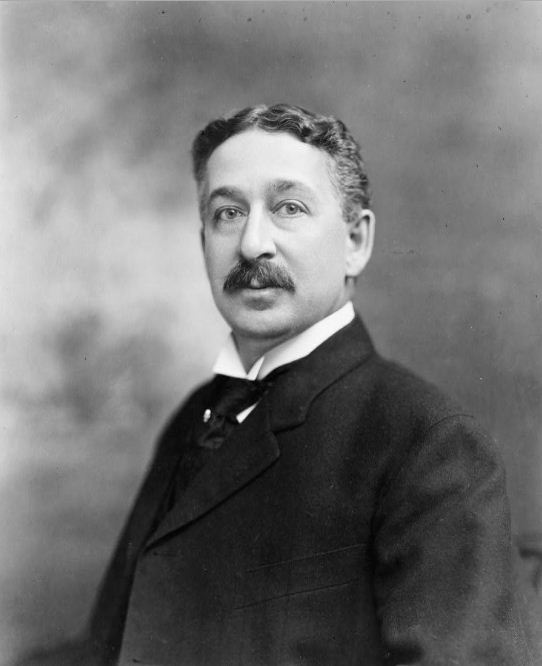
ولد كينغ كامب جيليت فى السادس من يناير عام 1855 فى مدينة فون دو لاك التابعة لولاية ويسكونسن بالولايات المتحدة الأمريكية. كان لجيليت
the youngest of five siblings (three boys and two girls). His parents were known as inventors, always working on useful things to make and sell
to make money. This does not mean they faced no difficulties in their professional lives; they faced many challenges, failed often, and lost a great deal of
money. However, in the end, they managed to achieve many successes and make profits. The environment surrounding young Gillette had a great influence on him and made him love
Despite his many inventions and innovations, he was unable to introduce his most important and famous invention—the Gillette razor blades—until many years later.
Success Was Yet to Come:
When young Gillette turned four, his family decided to move elsewhere. Their destination was Chicago, along with some of the money his father had.
He decided to open a small business selling equipment and machinery, but disaster struck: the shop was completely destroyed in the Great Chicago Fire, which took place in
1871. After this incident caused the family to lose their money, his father decided to move elsewhere with his family. This time, their destination was New York.
There, his father worked as a patent agent. Because of his work, conversations about the latest inventions often came up when the family gathered around the dinner table.
The importance of inventors and these conversations inspired young Gillette to become an inventor. It is worth noting that the idea of inventing something had been on his mind for a long time, but
Gillette did not have enough money to conduct research. This led him to leave school at the age of seventeen and take a job as a
sales representative. He never saved the money he earned or spent it on himself; instead, he spent it all on his research and inventions.
.
Gillette Takes the World by Storm:
In 1890, when Gillette was thirty-five, he felt that his efforts were getting him nowhere. Although he owned the rights to four
inventions, he felt they were not generating worthwhile financial returns. He often remarked that the people using his inventions made far more money than
he did. Meanwhile, his parents had created several successful inventions and earned substantial profits—so much so that his mother, Mrs.
“Fanny Lemira” wrote a cookbook featuring many distinctive, exclusive recipes and titled it
“The White house Cookbook” ليصبح فيما بعد واحداً من اهم كتب الطهي في التاريخ الامريكي. كل هذة الامور جعلت جيليت يشعر
in 1894, he decided to write a book about economics to attack capitalism and patent rights.
.
Invent What People Need, Gillette:
The book he wrote certainly achieved no success, because it offered no real value or useful information for readers. This latest failure only made things worse.
Gillette then felt that he was a miserable failure and would never invent anything truly useful. So he decided to return to where he had started. He went back to Wisconsin, his “birthplace,”
in 1895, where he found an opening as a salesperson at a company specializing in bottle caps.
Made of cork. He applied for the job, was accepted, and started working at the company. While he was there, the manager and company president, William Painter, noticed that Gillette was unhappy, so he spoke with him.
and advised him to invent a product that was not durable and that people would need regularly—just like the cork stoppers the company sold. Customers bought them to
seal bottles, but after one or two uses, the stoppers softened and could no longer seal the bottle openings. So customers threw them
in the trash and came back to buy more stoppers.
.
At Last, Gillette Finds the Right Invention:
He was persuaded by the advice of the company president he worked for and wanted to apply it to many products, but doing so was not easy at all. Before despair could
take hold of Gillette again, one spring morning in 1895, as he shaved, he realized that his razor blade was no longer as sharp as it had been and could no longer
He could remove hair, and since he needed to shave, he decided to sharpen the blade with a special file. But the blade was completely damaged and no longer
usable for shaving. That was when he realized a razor blade was the right product: people need it regularly, and when it wears out, they throw it away and buy another.
Specifications of the New Product:
He wanted to make razor blades that were extremely thin and sharp, yet rustproof, and that users could easily remove from
manual razors and replace with new blades. These features may seem very ordinary—or even basic—by today’s standards, but in 1895 they were not
ordinary at all. Metal smelting experts, metalworkers, and blacksmiths whom Gillette consulted mocked him and told him
that what he was asking for was impossible.
.
Don’t say no before you try:
Five years later, in 1900, Gillette managed to meet William Emery Nickerson, one of the leading experts in
chemistry at the time. He was also known for successfully carrying out many complex, seemingly impossible inventions and projects. He had even made an electric light bulb
using a chemical process, despite Thomas Edison himself saying it was impossible. After Gillette met him and explained his idea, the expert’s response came as a shock.
He told Gillette that what he was asking for was impossible and refused to put the idea into practice without first testing it. But fate had it that one of the investors at the time—whose
opinion had nearly crushed Gillette’s dreams—was there to save the day. He persistently urged William to give it a try, and
William eventually agreed. Surprisingly, when he tested the idea, he found that putting it into practice was neither impossible nor as complicated as he had thought.
So he kept trying until he came up with a general idea of how to manufacture razor blades to the desired specifications.
.
Founding Gillette:
لأن المنتج متميز ومطلوب ويحتاجة الناس بشدة لم يجد جيليت صعوبة في اقناع عدد من المستثمرين الامريكيين بتمويلة بمبلغ خمسة الاف دولار
in startup capital to establish his new company, which he named the American Safety Razor Company. This was in
1901. In 1902, however, Gillette, the company’s president, asked the partners to change the company’s name. They agreed, and it became the Gillette Safety Razor Company
للحلاقة الآمنة.
.
خسائر فادحة:
Gillette’s blades were innovative, helped men save a great deal of time, and were safer than the other blades available at the time. Yet,
despite all this, men did not rush to buy the blades after seeing the ads. The situation remained unchanged until the company ran out of money entirely, with losses reaching
about $12,000—a huge sum at the time, enough to make Gillette consider declaring the company bankrupt. But before taking that step, his partner
William tried to persuade an investor at the time to inject funds and save the company from bankruptcy. The investor agreed, but in return demanded 51% of the
company, which would make him the primary decision-maker in all matters. Gillette rejected the offer. William then approached another investor, who had previously funded
one of Gillette’s failed ideas. This investor did not turn William down and agreed to provide funding in exchange for a large stake in the company, leaving Gillette with little choice then
He agreed to the offer, the deal was finalized, and the funds were invested in the company.
.
Stepping down as president:
William began preparing a new production line with greater precision and quality. By mid-1903, he was able to introduce Gillette’s new razor to the market. It was a
handheld razor supplied with one replaceable blade, and it cost $5 at the time. The company also introduced razor blades designed to fit the razors,
selling them for $1 per pack (20 blades). These prices were, of course, very high for people at the time, since the average person’s monthly salary
in the United States in 1903 was no more than $50. As a result, the company was unable to sell many of its products, selling only 51 razors
and 168 packs of blades. These low sales did not allow Gillette to leave his job at the bottle-cap company, which had asked him to travel to
He was in London on a business trip and, unwilling to leave his company behind, asked the investors to set aside a monthly allowance for his family so he could continue working at the company.
Bottle caps. Unfortunately, his request was rejected, particularly by the new investor who had injected funds into the company to save it from bankruptcy. At that point,
Gillette had no choice but to agree to travel to London. He went in early 1904.
.
Returning to the role of president:
In 1904, after he traveled to London, the company’s sales soared, selling more than 90,000 razors and 200,000 boxes of blades.
That same year, Gillette managed to register his new invention: a razor capable of holding two blades at the same time.
Of course, all of this was great news for the company. But problems never go away: that same year, another issue arose concerning the development of the production line so that it could
Producing more of the razors that were in high demand in the market, as well as developing the business, required a great deal of money. At the time, Gillette learned
that the investor he had brought in to help save the company intended to sell the production rights to international investors. This angered Gillette and forced him to return from
London to stop the decision. It is worth noting that Gillette used some underhanded tactics to secure a larger stake in the company than the troublesome investor,
and once he had done so, persuaded the board to overturn the investor’s decision and prevent him from selling the production rights to foreign investors.
He also convinced them to appoint him company president again and pay him a salary, while demoting the troublesome investor to vice president.
.
Numerous advertising experiments:
Gillette paid close attention to advertising, recognizing it as a way to attract more customers and drive sales. He put his own portrait on the packages containing the razors.
The company’s products came with the slogan, “If the razor isn’t exceptional, I wouldn’t ask you to try it”—a phrase that was, of course, meant to increase customers’ confidence.
…target customers and encourage them to buy. He also took a unique step by encouraging the press to write about modern razors. He would
personally write free articles for daily newspapers, teaching people how to dispose of razor blades once they became dull.
These methods, of course, helped him greatly to earn customers’ trust and generate substantial profits. But he was always passionate about advertising and keen to
try new ads and promotional techniques. So, in 1905, he tried a new kind of advertisement: a print ad featuring a picture
of a happy infant whose face was covered in shaving cream and who was holding a Gillette razor blade in his right hand. At the top of the picture, it said:
On the left, it says “Begin Early,” meaning “Start early.” In the upper-right corner, it says “Shaving Yourself,” meaning “Shave for yourself.” At the bottom, it reads:
“Safety Razor.” These were all promotional slogans encouraging consumers to buy.
The following year, he tried a new kind of advertising based on featuring public figures in ad campaigns. He designed a print ad
showing George Washington holding two razors, one made by Gillette and the other by a different brand. The ad was intended to suggest
that Gillette razor users were more free and independent than people who used other brands. This advertising strategy, based on featuring
public figures, was very successful. Gillette therefore decided to use it for many years, but did so by partnering with sports stars.
It was time for them to appear in print ads alongside shaving machines.
.
Getting rid of the troublesome investor:
Do you remember the investor who saved the company from bankruptcy by injecting funds, then returned and made such poor decisions that Gillette had to resort to a few
secret tricks to reclaim the presidency and make the investor vice president? Well, this investor didn’t like Gillette’s management style and
opposed him. Since he didn’t hold a position of sufficient authority to make and implement decisions or enforce his views, he decided to offer his stake in the company for sale. He went to Gillette
and offered him his stake for $900,000—a huge sum at the time. Surprisingly, Gillette accepted the man’s offer and welcomed him. The sale was completed in 1910, allowing Gillette to get rid of this troublesome man. It is worth noting that Gillette decided to
عرض الرجل ورحب بة وبالفعل تمت صفقة البيع في عام 1910 وبذلك تمكن من التخلص من هذا الرجل المزعج. الجدير بالذكر ان جيليت قرر ان
He stepped down from managing the company that same year, leaving it to his family at the age of 55.
.
Long-Term Marketing:
Although he had stepped away from managing the company, he continued to offer advice, especially on marketing. When World War I began and
many Americans were called up to serve in the war, Gillette suggested giving every soldier in the army a razor. The proposal was well received
and impressed the company’s leadership. They immediately designed durable packaging suited to wartime conditions and sold it to the army at cost. The company managed to
distribute more than 3.5 million razors and more than 32 million razor blades. It is worth noting that many soldiers continued to buy and use
Gillette razors and blades even after the war ended. King Gillette’s idea was truly brilliant.
.
An Unexpected Ending:
Gillette sold his shares in the company but continued as its official spokesperson. He also served as a goodwill ambassador. Wanting to live a
quieter life, he decided to move to California, where he bought a farm and planted it with orange and palm trees. Meanwhile, he worked hard to make his son
an inventor like him, but he was never successful. As time passed, the year 1929 brought the Great Depression (the most famous economic crisis of the twentieth
century). As a result, Gillette lost all his money and became impoverished. He did not want to give up, so he decided to try something new: he attempted to extract oil from
oil shale, but failed. Not long afterward, he passed away on July 9, 1932, at the age of
الـ 77 عام.
.
Gillette Is Still Going Strong:
The company did not die with Gillette; it continued to operate and is now considered the world’s leading company in the manufacture and production of razors and blades.
Shaving: for every blade sold by its competitors, Gillette sells five. It is worth noting that Gillette became part of Procter & Gamble after
it acquired the company in 2005 in a deal worth $57 billion.







