
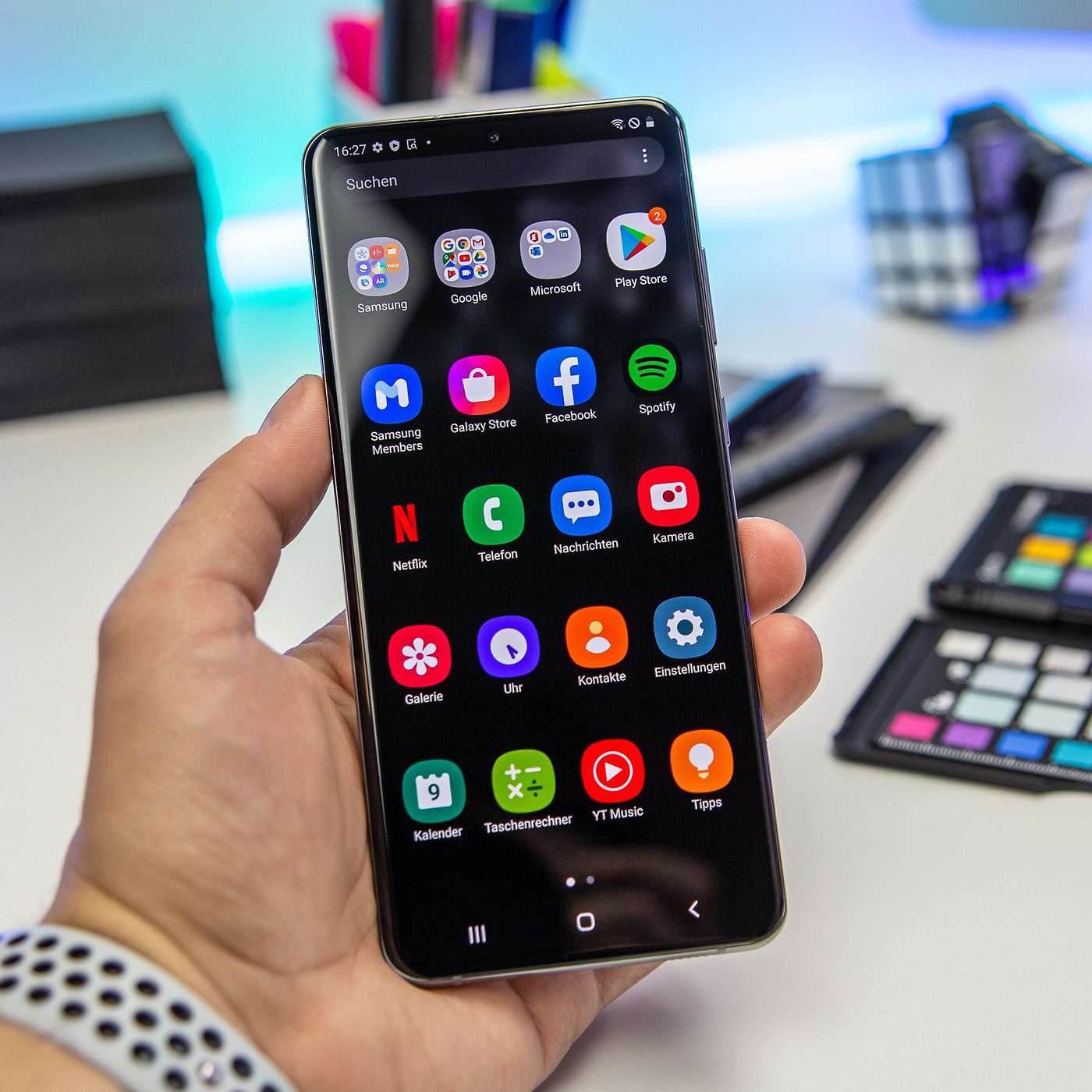
3 Key Reasons Users Don’t Download Your App
10 August، 2021
Top 10 Profitable Business Ideas After the COVID-19 Pandemic
10 August، 2021
Mobile app marketing strategies are constantly evolving. As apps move away from operating as standalone platforms
and become part of broader mobile strategies, many companies are reconsidering why they began
their mobile app development journey in the first place, and learning how mobile app marketing works, why it matters, and how to succeed at it.
Developing an app (or a suite of apps) without a clear strategy is no longer acceptable. The impact
of mobile apps is undeniable. We now recognize their value as an essential part of business, but we must also reconsider
Evaluate how mobile apps are marketed.
In the past, most companies developed their apps (usually by hiring a mobile developer, using an app
builder (DIY), or learning how to build the app in-house), then promoted them through traditional marketing channels. However, as
the smartphone boom created new opportunities for businesses, this approach stopped working. Instead, the organizations
most successful at marketing their apps are those prepared to invest significant resources in promoting them and getting the app
لأيدي عملائها.
How to Market Mobile Apps
Studies show that the number of people using mobile devices surpassed the number using desktops by
nearly 200,000 people between 2014 and 2015. This made 2015 worthy of the title “Year of Mobile.”
However, the label “Year of Mobile” is up for debate.
To begin with, mobile has been evolving into a way for customers to connect with their favorite brands over the
past few years. That’s why some mobile experts prefer the term “Mobile Era” over “Year of Mobile.” But regardless
of what we call it, customers expect mobile apps to be their primary point of contact with
their favorite brands. In fact, 90% of the time spent on mobile devices is spent on
التطبيقات.
One thing is crystal clear: customers prefer shopping and engaging with brands on mobile
بدلاً من القنوات الأخرى. لذا، إن لم تكن mobile marketing strategy الخاصة بك قوية وفعالة، فالزبائن سيبحثون
to one of your competitors for a better mobile shopping experience.
.
Mobile App Marketing Challenges
Even if you’re an experienced marketer, it’s important to recognize that app marketing is a whole new game, with different rules and players.
One common question marketers face is how to market their apps. It calls for new marketing approaches.
Challenges marketers face in mobile marketing include unfamiliar channels, targeting issues, and understanding
user app download behavior, app store rankings, and more.
To help you succeed at mobile app marketing, we’ve put together a selection starting with
10 proven app marketing strategies.
10 Proven Ways to Market Mobile Apps
1. Focus on KPIs tailored to the app market
Mobile app marketing may be new to you, but setting goals is much like setting them for most other marketing campaigns.
Your goals should be specific, measurable, and realistic. What differs are the channels and tactics, as well as understanding
the finer points of apps that can help you achieve those goals.
App marketing brings several challenges. Beyond revenue and speed, you need to focus on KPIs
tailored to app marketing. These include app store rankings and traditional (organic) acquisition.
for loyal users, cost per download, and app store optimization.
For many marketers, these are new and unfamiliar areas. So it makes sense to assign a dedicated team
to focus on the importance and value of key performance indicators in your marketing plan. When setting your goals (you won’t have
just one goal), you may decide to distinguish between primary and secondary goals. You probably do this in other areas
of marketing, so apply the same approach to your strategies.
It’s also important to understand how these goals support your company’s overall direction. To do this, your goals should
App marketing is closely aligned with the goals of other marketing strategies. However, it should
focus on KPIs tailored specifically to mobile app marketing.
.
2. Allocate the resources your app needs
Marketers often underestimate mobile advertising. They devote only a small percentage
of their marketing budget to it (sometimes less than one percent).
However, in the “mobile era,” apps are a powerful marketing tool and therefore require more resources to be allocated to them.
marketing-focused. Studies indicate that 80% of consumers want to receive local alerts on
their mobile phones. It therefore makes sense to invest in geo-fencing—the creation of a virtual perimeter around a real-world geographic area—and adopt alert-based marketing strategies,
because that’s what consumers want.
على التنبيهات، لأن هذا ما يريده المستهلكون.
A study conducted by the Mobile Marketing Association on the effectiveness of mobile app marketing
suggests that the mobile marketing budget should be increased by around 7% or 9%.
Once you’ve restructured your marketing budget and set aside the resources for your apps, you need to find a plan
for using that budget. Advertising and promoting your apps should be creative and engage consumers,
and it should also be consistent. Without planning your budget accordingly, you could run out of resources before the work is done.
Your goal should be to keep your app visible in key markets throughout the year. For example,
you can spend more during the holidays to make consumers notice your apps.
.
3. Avoid spreading yourself too thin
Every company is fighting to secure space for its apps and outperform the competition—and the same can happen between departments within your company.
As the organization grows and more departments are added, more people will feel that your app (and marketing strategy)
falls within their area of responsibility.
Instead of internal disputes over ownership, bring these different stakeholders together as one team. That way, you’ll not only
satisfy the people who feel they should have a say in your mobile app strategy,
but also make those strategies more successful.
Aligning the goals of all these different departments may not be easy, but through ongoing communication
and regular meetings with team members, you’ll be much better positioned to align their different goals
and reduce internal conflicts. You’ll also gain more insights and creative input
to plan and execute these campaigns.
.
4. Strengthen Your Mobile App Marketing Team with a Telemarketing Expert
Even if your marketing and advertising department (or your advertising agency, if you work with an outside firm) has a wealth of
Expertise and experience: mobile marketing is a different battlefield and requires new expertise and technology. Even
digital marketers are not always familiar with the challenges mobile presents. Some of these challenges include
optimizing your marketing efforts to achieve better rankings, app usage analytics, media targeting,
sales, and more (we’ll discuss these in more detail below).
If your budget can accommodate partnering with a mobile marketing technology provider, you may want to discuss this option
with your team members or any external agencies managing your mobile app marketing campaigns. This may take up part of
your budget, but this tactic will give your app a better chance of success and of achieving a higher ranking in app stores.
.
5. Market the experience, not the app
In the past, when companies developed apps simply to give their customers something to use, it was acceptable to
market the app itself. That’s no longer true today, because you don’t want to sell your audience the app itself. Instead,
you want to sell the experience your app provides. More importantly, you want to show how that experience stands out and surpasses
the experiences offered by others.
This is by no means a new concept. Today’s consumers are looking for the simplest experiences offered by
brands. In fact, 86% are more likely to buy when they aren’t overwhelmed with confusing information. Keep
this in mind when writing your app store description. Promote how your app can simplify users’ lives,
not every little task it can perform.
Marketing the experience rather than the app has made customer experience a top priority for companies across nearly every
industry. Don’t market your app—that simply isn’t enough anymore. Focus on the experiences that
Only your app can offer it.
.
6. App marketing isn’t just about billboards
No matter how big or well-known your brand is, promoting your app through traditional tactics (such as
signage, your website logo, email and newsletters, etc.) and touchpoints (such as media and social
channels) won’t be enough.
This is a complex process. It assumes that consumers will see your app ad, then pull out their phone and search
about the app—or better yet, make it available with a click or tap! While most customers will find your app through
the marketplace they choose (for example, Google Play or the App Store), you can’t be sure that
this alone will be enough, especially when your competitors’ apps are available there too. The
مرئية أكثر.
key to marketing mobile apps may be placing ads where mobile users already are. Companies have found
that the most effective way to promote their apps is through mobile ad networks and real-time
bidding exchanges. Without getting into the details, real-time bidding exchanges allow
This helps marketers reach their target audience effectively at a low cost.
In addition, companies have found that the more ad networks they invest in, the more successful they become. Paid
media can directly affect your app’s store ranking because it allows the app to be installed
consistently, improving its discoverability and reputation in the market.
.
7. Give your app an organic boost and help it reach new heights and a better ranking
Once again, paid media will certainly boost your app’s ranking, but ultimately you need to track
Users who discovered and installed your app on their own. In the app marketplace, there is a relationship between
users acquired through ads and organic users (meaning users who found you
مthrough search and on their own). The more downloads you get through your media, the higher your ranking will be
in the app stores, making you more visible to potential customers.
أفضل استراتيجية لتحقيق “دفعة عضوية” هي بتنظيم حملة مركزة.وتعتبر Nike واحدة من أفضل الشركات في
The benefit of focused campaigns: short-term, targeted ads drive a large number of downloads. This surge
in popularity will help you climb the rankings quickly on the App Store and Google Play. This, in turn,
will generate a large number of organic downloads. Once you have a significant number of organic users,
your ad spend can be reduced to the minimum needed to maintain those numbers.
Ultimately, your goal is to achieve the optimal ranking for your app, which means finding the best
possible balance between ad spend, app store rankings, and organic downloads. In other words,
You want to convert as many organic users as possible and get the most out of your money.
.
8. Downloads Don’t Equal Success
While more downloads can improve your ranking in app stores,
many other factors determine the success of an app marketing campaign. Beyond organic users,
there’s another, more valuable type of user: your loyal users.
Downloads certainly matter, but you spend a lot of time designing and developing the experience and service it delivers
The app. So, you want it to be thoroughly tested. Loyal users are the ones who will turn those
downloads into revenue and a positive return on investment, while making use of the app and all its features.
Many users, despite spending time downloading the app, won’t use it
more than once or twice. It’s important to reflect on this low retention rate, especially if you’re تطبيقات الهاتف. إن لم تكن
unable to acquire loyal users. You may have a problem with your app’s design and functionality. Without addressing those
issues, you won’t be able to get the most out of organic promotion campaigns to increase downloads.
Ultimately, loyal users will determine your app’s success and future.
.
9. Test for usability, not perfection
Measuring the success of app marketing is different from measuring success in traditional marketing for several
reasons. Smartphones—as both a tool and a means of communication—are new and also evolving rapidly, which means that what works today may
لا يصلح غداً.
Ever-changing technology opens up new channels every day. What’s best today may not be best tomorrow, because
more efficient and effective ways to transmit information are likely to emerge. Just look at geofencing
(geo-fencing) to see this.
Many companies apply traditional marketing evaluation and measurement methods to apps because they don’t know any others.
Others prefer traditional advertising and believe email campaigns will keep them competitive.
But we know that isn’t true.
You can use your time and resources to research new technologies and compare them with current practices. Then compare
the old and the new to choose what best meets your needs.
.
10. Keep going! Immerse yourself in the world of mobile phones
No matter how successful you are at marketing your apps, the work is never done. The mobile app landscape is dynamic
and constantly changing. Your app marketing team should meet regularly, keep up with the latest updates
and upcoming changes, and find ways to keep consumers engaged. It’s also important to monitor feedback
Consumer actions can help you monitor and understand changes in how users behave toward your app and competing apps.
Part of this strategy is to keep using Technology No. 9, test new media, and also take part in
industry discussions, as well as phone seminars and other events. This is especially useful if
you’re unable to partner with an app marketing technology platform (Technology No. 4), because it
will let you gain some of the expertise and knowledge that such a partnership could have provided.
.
خلاصة
At this point, it’s clear that mobile is a critical part of the marketing mix for our companies’ success. Therefore,
We need to move beyond developing an app just to have one. Instead, we should focus on understanding the impact
apps can have on increasing brand awareness, growing revenue, and even driving
traffic to stores.







